
In this article
Scaling, Tracking, and Growing Your Income
If you've already read Part 1 of this guide, you now understand the core principles of affiliate marketing. If you have not you can read the article on Affiliate Marketing For Beginners Part 1.
You've learned how affiliate marketing works, how to choose a niche, where to find affiliate programs, and how to create content that attracts potential buyers.
Those fundamentals are essential.
But they're only the beginning.
Once you start publishing content and generating traffic, a new set of challenges appears.
You'll need to understand how to avoid common affiliate marketing mistakes, track the performance of your affiliate links, manage growing numbers of promotions, and make informed decisions based on real data rather than guesswork.
You'll also need realistic expectations about income, an understanding of industry trends, and a clear picture of the legal and ethical responsibilities that come with recommending products online.
In this second part of our Affiliate Marketing for Beginners guide, we'll focus on the systems, strategies, and habits that help transform a collection of affiliate links into a sustainable long-term business.
Let's start with some of the most common mistakes that prevent new affiliate marketers from reaching their potential.
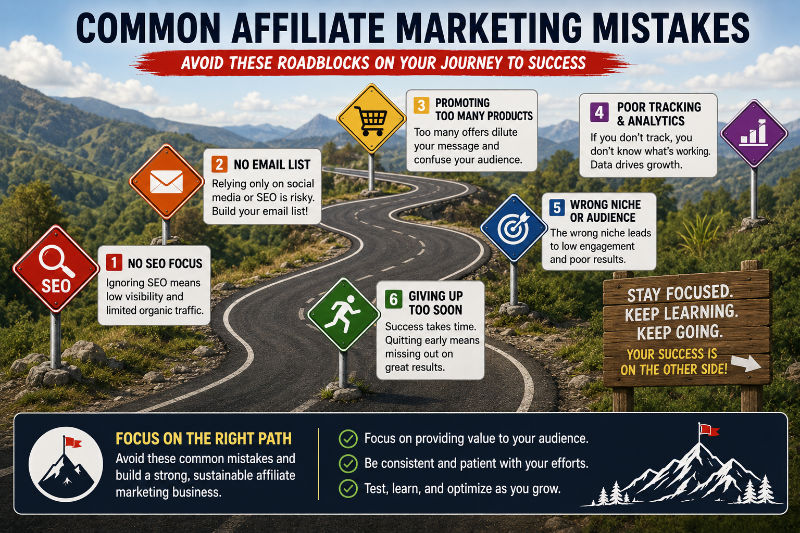
Common Affiliate Marketing Mistakes
One of the fastest ways to improve your affiliate marketing results is to avoid the mistakes that trip up most beginners.
The good news is that you don't need to learn every lesson the hard way.
Thousands of affiliate marketers have already made the mistakes, lost the commissions, wasted the time, and discovered what actually works.
If you can avoid the most common pitfalls, you'll give yourself a significant advantage from the very beginning.
Let's look at the mistakes that prevent many beginners from earning meaningful affiliate income.
Promoting Too Many Products
When people first discover affiliate marketing, they often sign up for every affiliate program they can find.
Suddenly they're promoting:
- Web hosting
- VPNs
- Software
- Cameras
- Fitness equipment
- Online courses
- Random gadgets
The result is usually confusion.
Their content lacks focus.
Their audience doesn't know what they stand for.
Their recommendations feel inconsistent.
Successful affiliates tend to be much more selective.
They focus on products that genuinely fit their niche and solve problems for their audience.
A smaller number of relevant recommendations will almost always outperform a huge collection of unrelated affiliate links.
Chasing High Commissions Instead of Helping People
A 50% commission sounds exciting.
A 10% commission sounds less exciting.
That's why many beginners automatically chase the highest-paying affiliate programs.
Unfortunately, commission percentages only tell part of the story.
A product with a 50% commission is worthless if nobody wants to buy it.
Meanwhile, a product with a lower commission might generate far more income if it solves an important problem and converts consistently.
Always start with the audience.
Ask yourself:
- Does this product help them?
- Would I recommend it if there were no commission involved?
- Does it genuinely solve a problem?
The commission should be a secondary consideration.
Writing Content Nobody Is Searching For
Many new affiliates create content based entirely on what they want to write.
The problem is that search engines and readers don't care what you want to write about.
They care about what they need help with.
Imagine creating twenty articles that nobody ever searches for.
Even excellent content won't generate traffic if there is no demand.
Before creating content, spend time researching:
- Questions people ask
- Problems they face
- Products they compare
- Topics they search for
The best affiliate content sits at the intersection of audience demand and product recommendations.
Expecting Results Too Quickly
This is probably the most common mistake of all.
A beginner publishes:
- Three blog posts
- One YouTube video
- A few social media posts
Then they wait.
A week later, no commissions.
A month later, still nothing.
They decide affiliate marketing doesn't work.
In reality, most successful affiliate marketers spent months building content before seeing meaningful results.
Affiliate marketing rewards consistency.
Each piece of content adds another opportunity to attract visitors and generate commissions.
The people who succeed are usually the ones who continue publishing long enough for those efforts to compound.
Ignoring Search Engine Optimisation
Search engine optimisation (SEO) remains one of the most powerful traffic sources for affiliate marketers.
Yet many beginners ignore it completely.
They create content without considering:
- Search intent
- Keywords
- Content structure
- Internal linking
- User experience
The result is content that struggles to rank in search engines.
You don't need to become an SEO expert overnight.
However, understanding basic SEO principles can dramatically increase the visibility of your content.
The more people who find your content, the more opportunities you have to earn affiliate commissions.
Relying on a Single Traffic Source
Many affiliate marketers build their entire business around one platform.
Examples include:
- YouTube
- TikTok
The danger is obvious.
Algorithms change.
Platforms evolve.
Traffic sources disappear.
A business built entirely on one platform can be vulnerable.
The strongest affiliate businesses attract visitors from multiple sources.
For example:
- Search engines
- YouTube
- Email marketing
- Social media
- Referral traffic
Diversification creates stability.
Not Building an Email List
Many affiliates focus entirely on generating clicks.
Fewer focus on building relationships.
That's where email marketing becomes important.
An email list gives you direct access to your audience.
You don't have to rely entirely on search engines or social media algorithms.
You can continue helping your audience long after their first visit.
Many experienced affiliate marketers consider their email list one of their most valuable business assets.
Recommending Products You Don't Trust
Every recommendation affects your reputation.
If you recommend poor products purely for commissions, people eventually notice.
Trust takes a long time to build.
It can be lost very quickly.
Whenever possible:
- Use the products yourself.
- Research them thoroughly.
- Understand their strengths and weaknesses.
- Be honest about limitations.
Transparency builds credibility.
Credibility drives affiliate sales.
Hiding Affiliate Relationships
Some beginners worry that disclosing affiliate relationships will reduce sales.
The opposite is often true.
People appreciate honesty.
A simple disclosure helps build trust while ensuring you comply with legal requirements.
Most readers understand that creators need to earn money.
What they don't appreciate is feeling misled.
We'll discuss affiliate disclosures in more detail later in this guide.
Using Ugly, Confusing Affiliate Links
This mistake is more common than most people realise.
Many affiliate links look something like this:
https://affiliate-network.com/product?id=837264&affiliate=9283&campaign=112
These links can appear:
- Unprofessional
- Confusing
- Difficult to remember
- Difficult to share
Long, messy URLs may also reduce trust, especially when shared on social media, podcasts, videos, or email newsletters.
This is one reason many experienced affiliates use branded links instead.
A branded link might look like:
yourwebsite.com/go/best-camera
or
yourwebsite.com/to/recommended-hosting
These links are cleaner, easier to remember, and reinforce your brand.
Losing Track of Affiliate Links
As your content grows, affiliate link management becomes increasingly important.
Imagine you've created:
- 100 blog posts
- 50 YouTube videos
- Multiple email campaigns
- Dozens of social media posts
Now imagine one of your merchants changes their landing page.
Or discontinues a product.
Or launches a new offer.
Without proper link management, updating all those affiliate links can become incredibly time-consuming.
Many affiliates underestimate this problem until their content library becomes large.
This is where affiliate link management tools such as GoshLinks can become valuable.
Instead of updating links across hundreds of pages individually, you can manage branded links from a central dashboard and update destinations whenever necessary.
For affiliates publishing content regularly, this can save countless hours while helping ensure visitors always reach the correct destination.
Focusing on Traffic Instead of Conversions
More traffic isn't always the answer.
Consider two scenarios:
Website A receives 50,000 visitors per month and earns very few commissions.
Website B receives 5,000 highly targeted visitors and generates substantial affiliate income.
Which business would you rather own?
Targeted traffic is often far more valuable than large amounts of untargeted traffic.
Focus on attracting the right visitors rather than simply chasing bigger numbers.
Comparing Yourself to Established Affiliates
It's easy to become discouraged when you see successful affiliates publishing income reports or showcasing large audiences.
Remember:
You're seeing the result of years of work.
Most successful affiliates started exactly where you are now.
With:
- No audience
- No traffic
- No commissions
- No experience
The difference is that they kept going.
The Biggest Mistake of All
If there's one mistake that causes more affiliate marketing failures than any other, it's quitting too early.
Most affiliate businesses grow gradually.
Content accumulates.
Traffic increases.
Trust develops.
Commissions begin appearing.
Then momentum builds.
The affiliates who succeed are rarely the smartest or luckiest.
They're often the ones who simply stayed consistent long enough to see the results of their efforts.
Avoid the mistakes we've covered in this section and you'll already be ahead of a large percentage of new affiliate marketers.
Now let's look at one area that many affiliate guides barely mention but becomes critically important as your business grows: affiliate link management, tracking, and protecting your commissions.
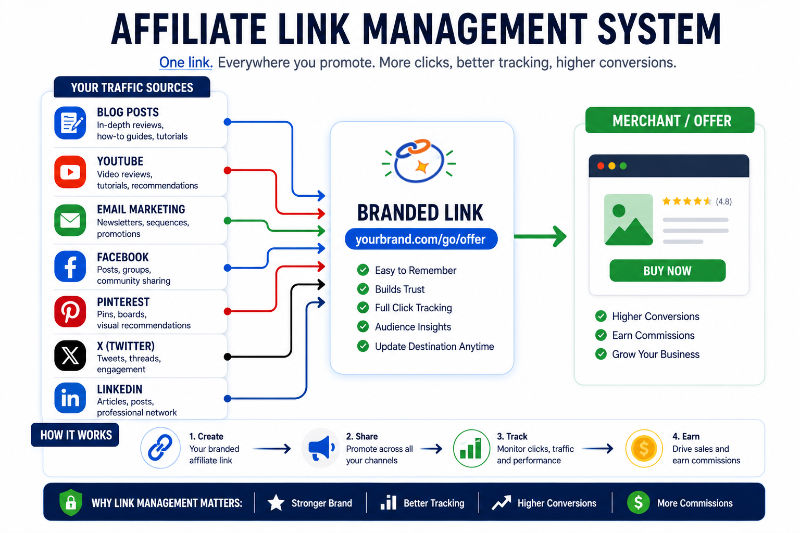
Affiliate Link Management and Tracking
Most beginners think affiliate marketing is about creating content and inserting affiliate links.
For a while, that's true.
When you only have a handful of articles and a few affiliate links, managing everything is fairly straightforward.
But something interesting happens as your affiliate business grows.
You publish more content.
You join more affiliate programs.
You promote more products.
Suddenly, what once felt simple becomes much harder to manage.
This is where affiliate link management and tracking become important.
In fact, many experienced affiliates would argue that managing your affiliate links properly is just as important as generating traffic.
After all, if your links don't work correctly, you can't earn commissions.
Why Affiliate Link Management Matters
Let's imagine you've been building your affiliate website for two years.
During that time you've created:
- 150 blog posts
- 40 product reviews
- 25 comparison articles
- Multiple email campaigns
- Social media content
- YouTube videos
Across all that content, you might have hundreds or even thousands of affiliate links.
Now imagine one of the following happens:
- A merchant changes a landing page.
- A product is discontinued.
- An affiliate program closes.
- A special offer expires.
- A new version of a product launches.
If you've pasted raw affiliate links throughout your content, updating them can become a major project.
You may need to manually locate and edit links across dozens or hundreds of pages.
That takes time.
It also increases the risk of mistakes.
Broken Links Cost Real Money
Many affiliates never realise how much money they lose through broken links.
Visitors click.
Nothing happens.
Or they land on the wrong page.
Or they see a product that no longer exists.
Every failed click represents a potential commission that may never be recovered.
The larger your content library becomes, the more important it is to ensure your links remain accurate and up to date.
The Problem With Raw Affiliate Links
Most affiliate programs generate links that look something like this:
https://merchant.com/product?id=7281&affiliate=58392&campaign=117
Technically, there's nothing wrong with these links.
They work.
The problem is that they create several challenges.
They're often:
- Long
- Difficult to remember
- Difficult to share verbally
- Unattractive in content
- Hard to manage at scale
They also do very little to strengthen your own brand.
When people see a raw affiliate URL, they're focused on the merchant's brand rather than yours.
What Are Branded Affiliate Links?
A branded affiliate link replaces a long affiliate URL with a cleaner, easier-to-read link.
For example:
Instead of:
https://merchant.com/product?id=7281&affiliate=58392&campaign=117
You might use:
yourwebsite.com/go/recommended-camera
or
yourwebsite.com/to/best-hosting
The visitor clicks the branded link and is redirected to the affiliate destination behind the scenes.
The affiliate tracking still works exactly as before.
The difference is that the link is cleaner, more professional, and easier to manage.
Benefits of Branded Affiliate Links
Branded links offer several advantages.
Improved Trust
People generally feel more comfortable clicking links associated with a brand they recognise.
A branded URL reinforces your identity and can make links feel more trustworthy.
Easier Sharing
Branded links are easier to remember and share.
This can be especially useful when:
- Recording videos
- Hosting webinars
- Appearing on podcasts
- Sharing links on social media
It's much easier to say:
"Visit mysite.com/bestcamera"
than read out a long affiliate URL.
Better Organisation
Branded links allow you to create meaningful names for campaigns and promotions.
For example:
- yoursite.com/email-tool
- yoursite.com/hosting
- yoursite.com/favourite-camera
- yoursite.com/art-supplies
This makes managing large numbers of links significantly easier.
Why Professional Affiliates Track Clicks
Traffic tells part of the story.
Click tracking tells the rest.
Without tracking, you're often guessing.
You may know that an article receives visitors, but you don't know:
- Which links get clicked most often.
- Which products attract the most interest.
- Which content generates buying intent.
- Which campaigns deserve more attention.
Click tracking helps answer those questions.
The more data you collect, the better your decisions become.
What Metrics Should Affiliates Track?
As your affiliate marketing business grows, pay attention to metrics such as:
Clicks
How many people are clicking your affiliate links?
Top Performing Content
Which articles or videos generate the most engagement?
Popular Products
Which recommendations attract the most interest?
Traffic Sources
Where are your visitors coming from?
Conversion Trends
Which types of content lead to the strongest buying behaviour?
Understanding these metrics helps you focus your efforts where they matter most.
The Power of Centralised Link Management
One of the biggest advantages of using a link management system is centralisation.
Instead of managing affiliate links across hundreds of individual pages, you manage them from a single location.
Imagine you've promoted a web hosting company across:
- 20 blog posts
- 15 emails
- 10 YouTube videos
One day, the company changes its affiliate landing page.
Without a management system, you may need to update every individual link.
With a centralised approach, you update the destination once and every branded link automatically points to the new location.
That's a huge time saver.
How GoshLinks Helps Affiliate Marketers
This is one of the reasons affiliate marketers use tools such as GoshLinks.
Rather than scattering raw affiliate URLs throughout your content, GoshLinks allows you to create branded links that are easier to organise, track, and manage.
For example, instead of sharing:
merchant.com/product?id=7281&affiliate=58392
you could create:
yourwebsite.com/go/recommended-product
If the destination changes in the future, you simply update the link inside GoshLinks.
Every blog post, video description, social media post, and email continues working without requiring manual edits.
For content creators who publish regularly, this can save a considerable amount of time while helping reduce the risk of broken affiliate links.
Organising Affiliate Campaigns
As your affiliate marketing business expands, organisation becomes increasingly important.
Many affiliates eventually promote:
- Multiple merchants
- Seasonal campaigns
- Product launches
- Special promotions
- Evergreen content
Without organisation, things become messy very quickly.
Creating a structured system for naming, categorising, and tracking links makes future management significantly easier.
This may seem unimportant when you have ten links.
It becomes essential when you have hundreds.
Future-Proofing Your Affiliate Content
One of the smartest things you can do as an affiliate marketer is think long term.
Every article you publish is an asset.
Every video you create is an asset.
Every email you send has the potential to generate commissions in the future.
Protecting those assets means protecting the links that connect your audience to the products you recommend.
Good affiliate link management helps ensure:
- Visitors reach the correct destination.
- Promotions remain current.
- Tracking remains accurate.
- Opportunities aren't lost due to broken links.
The larger your affiliate business becomes, the more valuable this becomes.
Link Management Is a Competitive Advantage
Many beginners ignore affiliate link management completely.
Experienced affiliates rarely do.
They understand that generating traffic is only half the challenge.
The other half is ensuring that traffic reaches the right destination and continues generating commissions over time.
Proper link management helps you:
- Save time
- Improve organisation
- Protect commissions
- Track performance
- Scale more effectively
It may not be the most exciting part of affiliate marketing, but it can have a significant impact on long-term results.
Now that we've covered how to manage affiliate links and protect your commissions, let's tackle one of the questions every beginner wants answered: how much money can you actually make with affiliate marketing, and what should realistic expectations look like?
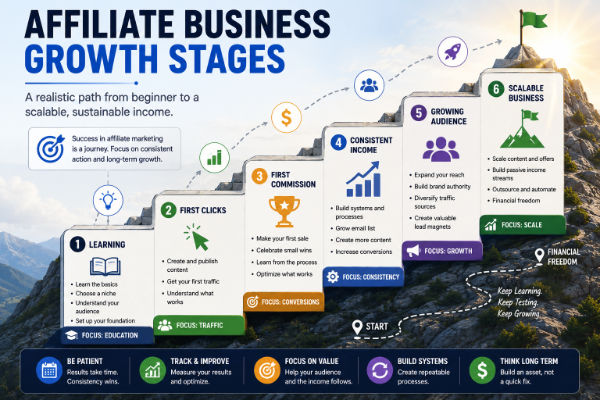
How Much Money Can You Make With Affiliate Marketing?
This is usually one of the first questions people ask when they discover affiliate marketing.
It's also one of the most difficult questions to answer accurately.
Why?
Because affiliate income varies enormously.
Some affiliates never earn a single commission.
Others earn a few hundred dollars per month.
Some build businesses that generate thousands or even tens of thousands of dollars each month.
The difference rarely comes down to luck.
It usually comes down to factors such as:
- Content quality
- Audience trust
- Traffic levels
- Niche selection
- Consistency
- Time invested
The good news is that affiliate marketing has a relatively low barrier to entry.
The bad news is that it still requires work.
Let's look at what realistic expectations often look like.
The Beginner Stage
Most affiliates start here.
They have:
- Little or no traffic
- Few pieces of content
- No email list
- Limited experience
At this stage, the primary goal shouldn't be income.
The goal should be learning.
You're learning:
- How affiliate programs work
- How to create useful content
- How search engines operate
- How to attract visitors
- How to build trust
Many beginners earn little or nothing during their first few months.
That's completely normal.
The foundations you're building now often determine future success.
The Growth Stage
As content accumulates, something interesting starts to happen.
Visitors arrive from:
- Search engines
- Social media
- YouTube
- Referrals
- Email newsletters
Your audience begins to grow.
Your recommendations become more refined.
You start understanding which content performs best.
At this stage, many affiliates begin seeing their first meaningful commissions.
The exact amount varies widely, but this is often where people move from occasional commissions to consistent monthly income.
The Established Stage
Eventually, content starts compounding.
Articles published months or years ago continue attracting visitors.
Videos continue generating views.
Email lists continue growing.
Affiliate commissions become more predictable.
At this stage, the affiliate business starts behaving more like a genuine asset.
Instead of constantly chasing the next sale, you have systems producing results over time.
This is where many successful affiliates focus on scaling:
- Creating more content
- Expanding into related topics
- Building additional traffic sources
- Growing their email lists
The business becomes less dependent on any single article or campaign.
Why Comparing Income Figures Can Be Misleading
You'll often see affiliate marketers sharing income screenshots online.
Some are genuine.
Some are exaggerated.
Some leave out important context.
For example:
An affiliate earning $10,000 per month may have:
- Been building content for five years
- Published hundreds of articles
- Built a large email list
- Invested heavily in SEO
- Developed strong industry expertise
Looking only at the income figure ignores the work required to reach that point.
The better question isn't:
"How much does someone else make?"
It's:
"What can I realistically build if I stay consistent?"
What Determines Affiliate Income?
Several factors have a major impact on earnings.
Traffic
More targeted traffic generally creates more opportunities for affiliate sales.
However, traffic alone isn't enough.
A website with 5,000 highly targeted visitors may outperform one with 50,000 untargeted visitors.
Quality matters.
Trust
Trust is often the biggest conversion factor.
People buy from sources they trust.
The stronger your credibility, the more effective your recommendations become.
Niche
Some niches naturally generate more revenue than others.
For example:
A software product paying recurring commissions may produce significantly more income than a low-cost physical product.
That doesn't mean one niche is better than another.
It simply means commission structures vary.
Content Quality
Helpful content attracts visitors.
Helpful content earns links.
Helpful content gets shared.
Helpful content builds authority.
Everything starts with providing value.
Consistency
Affiliate marketing rewards consistency more than occasional bursts of activity.
Publishing one hundred useful articles over two years will usually outperform publishing ten articles and then disappearing.
The Power of Compounding Content
One of the biggest advantages of affiliate marketing is that content can continue generating results long after it's published.
Imagine publishing one helpful article every week.
After one year, you have:
- 52 articles
After two years:
- 104 articles
After three years:
- 156 articles
Each article becomes another opportunity to:
- Rank in search engines
- Attract visitors
- Generate affiliate clicks
- Earn commissions
This compounding effect is one reason affiliate marketing can become so powerful over time.
Recurring Commissions Can Change Everything
Many beginners focus exclusively on one-time commissions.
Recurring commissions can dramatically change the economics of affiliate marketing.
Imagine two affiliate programs.
Program A pays:
- $100 one-time commission
Program B pays:
- $20 per month recurring commission
After five months, Program B has already generated the same income.
After a year, it has generated significantly more.
This is why many experienced affiliates actively seek high-quality recurring commission opportunities.
Over time, recurring commissions can create a more stable income stream.
Why Most Beginners Quit Too Early
The early stages of affiliate marketing can feel frustrating.
You create content.
You wait.
Nothing seems to happen.
This period causes many people to give up.
The problem is that affiliate marketing often operates with a delay.
Content takes time to rank.
Audiences take time to trust you.
Traffic takes time to build.
The people who eventually succeed are often the ones who continue creating helpful content while others quit.
Focus on Building Assets
A useful way to think about affiliate marketing is to focus on assets rather than commissions.
Assets include:
- Articles
- Videos
- Email subscribers
- Social media audiences
- Resource pages
- Comparison guides
Each asset increases your ability to generate future commissions.
When you focus on building assets, commissions often become a natural by-product.
What Should Beginners Expect?
A realistic expectation is that affiliate marketing is a long-term business model.
It's not usually the fastest way to make money online.
It is, however, one of the most scalable.
Many successful affiliates started with:
- No audience
- No traffic
- No commissions
- No special advantages
What they did have was consistency.
They created helpful content.
They learned from mistakes.
They improved over time.
Eventually, the results followed.
The Real Opportunity
The biggest opportunity in affiliate marketing isn't earning a commission tomorrow.
It's building a library of content and an audience that can continue generating commissions for years.
That's the difference between chasing quick wins and building a real business.
When approached with patience and the right strategy, affiliate marketing can become a valuable long-term income stream.
The next question is where the industry is heading. Affiliate marketing continues to evolve rapidly, so let's look at the trends shaping affiliate marketing and what beginners should pay attention to in the coming years.
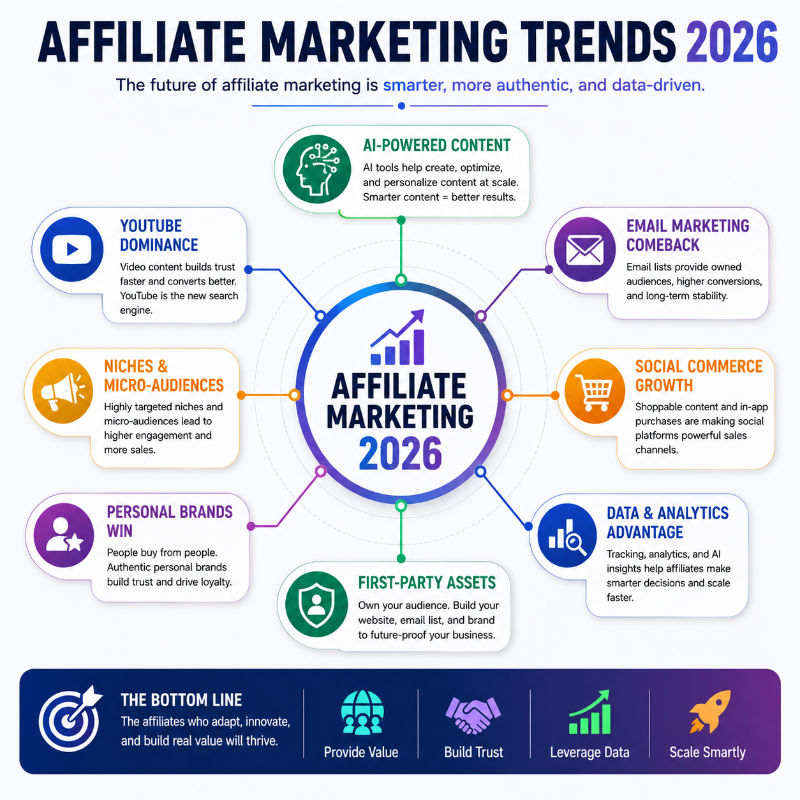
Affiliate Marketing Trends for 2026 and Beyond
Affiliate marketing has changed dramatically over the past decade.
Years ago, it was possible to throw together a simple website, add a few affiliate links, and generate commissions with relatively little effort.
Those days are largely gone.
Today's affiliate marketing landscape is more competitive, more sophisticated, and more focused on providing genuine value.
That's not necessarily a bad thing.
In fact, many of the changes happening today favour affiliates who focus on helping people rather than chasing shortcuts.
If you're just starting out, understanding where affiliate marketing is heading can help you build a business that's prepared for the future rather than relying on tactics that may stop working.
Artificial Intelligence Is Changing Content Creation
Artificial intelligence has become one of the biggest talking points in digital marketing.
AI tools can now help create:
- Blog posts
- Video scripts
- Social media content
- Email campaigns
- Research summaries
- Content outlines
This has made content creation faster than ever.
However, there's an important lesson many affiliates are learning.
Publishing AI-generated content alone is rarely enough.
As more people use AI, generic content becomes easier to create.
That means unique experience becomes more valuable.
The affiliates who stand out are increasingly those who combine AI assistance with genuine expertise, personal insights, case studies, testing, and real-world experience.
AI can help you work faster.
It cannot replace trust.
Experience Is Becoming More Important
Search engines, social media platforms, and consumers are all placing greater emphasis on experience.
People want to learn from individuals who have actually used products and solved problems.
This is one reason involved affiliate marketing continues gaining importance.
A creator who has personally tested a product can often provide insights that generic content cannot.
For beginners, this is encouraging.
You don't need a huge budget or a massive team.
You simply need real experience that helps your audience make better decisions.
Video Content Continues to Grow
Video has become one of the most influential forms of affiliate marketing content.
Many consumers now search YouTube before making purchases.
They want to see:
- Product demonstrations
- Reviews
- Comparisons
- Tutorials
- Real-world examples
Video helps build trust because people can see the product and hear directly from the creator.
This makes it easier to answer questions and address concerns before a purchase.
Even if your primary focus is a website, video can be a valuable addition to your affiliate marketing strategy.
Personal Brands Are Becoming More Powerful
Consumers increasingly prefer recommendations from people rather than anonymous websites.
That's why personal brands continue growing in importance.
Whether you're active on:
- YouTube
- TikTok
- Podcasts
your personal reputation can become one of your greatest assets.
People often follow individuals they trust.
Over time, those relationships make recommendations more effective.
This doesn't mean every affiliate needs to become an influencer.
It simply means authenticity matters more than ever.
Email Marketing Remains Extremely Valuable
While new platforms constantly appear, email remains one of the most reliable marketing channels available.
Unlike social media platforms, your email list belongs to you.
Algorithms don't control who sees your messages.
Platform updates don't suddenly eliminate your reach.
Many successful affiliate marketers continue investing heavily in email marketing because it provides direct access to their audience.
As competition increases, owning your audience becomes increasingly valuable.
Social Commerce Is Expanding
The gap between content and purchasing continues shrinking.
Many social media platforms now allow users to discover, research, and purchase products without leaving the platform.
This trend is likely to continue.
Consumers increasingly expect seamless buying experiences.
Affiliates who learn how to educate and recommend products effectively within social platforms may benefit from these changes.
However, the underlying principle remains the same.
Trust still drives purchases.
The platform may change, but human behaviour changes much more slowly.
Search Engines Are Evolving
Search engines continue becoming better at identifying useful content.
Simply repeating keywords is no longer enough.
Successful affiliate content increasingly focuses on:
- Expertise
- Experience
- Helpfulness
- Depth
- Originality
This is good news for affiliates who genuinely care about helping their audience.
It means quality content has a greater opportunity to stand out.
First-Party Assets Are Becoming More Important
One of the biggest lessons marketers have learned over the past few years is the importance of ownership.
Traffic sources can change.
Algorithms can change.
Platforms can change.
Assets you control become increasingly valuable.
Examples include:
- Your website
- Your email list
- Your domain name
- Your content library
- Your branded links
The more control you have over these assets, the less vulnerable your business becomes to external changes.
Why Branded Links Matter More Than Ever
As affiliate businesses grow, link ownership becomes increasingly important.
Many affiliates build content libraries containing hundreds or thousands of affiliate links.
Managing those links effectively becomes essential.
Branded links offer several advantages:
- Stronger brand recognition
- Easier management
- Better organisation
- Improved flexibility
- Greater control over destinations
This is one reason many professional affiliates use link management platforms such as GoshLinks.
Instead of relying entirely on raw affiliate URLs provided by merchants, they create branded links they control.
That control becomes increasingly valuable as content libraries expand.
Data-Driven Decisions Will Continue Winning
Successful affiliate marketers increasingly rely on data rather than guesswork.
They track:
- Clicks
- Traffic
- User behaviour
- Popular content
- Campaign performance
This information helps them make smarter decisions about:
- Content creation
- Product recommendations
- Marketing channels
- Resource allocation
The affiliates who understand their numbers often gain a significant advantage over those operating purely on instinct.
Trust Will Continue Being the Biggest Competitive Advantage
Despite all the technological changes happening in affiliate marketing, one thing remains remarkably consistent.
People buy from sources they trust.
Not from the affiliate with the most tools.
Not from the affiliate using the newest platform.
Not from the affiliate publishing the most content.
Trust remains the foundation.
The affiliates who consistently help their audience, provide honest recommendations, and focus on long-term relationships will continue having opportunities regardless of how the industry evolves.
What This Means for Beginners
The future of affiliate marketing is actually encouraging for beginners.
Many shortcuts are becoming less effective.
Many low-quality tactics are producing weaker results.
Meanwhile:
- Expertise matters more.
- Experience matters more.
- Trust matters more.
- Helpful content matters more.
Those are all things that motivated beginners can develop.
You don't need a huge budget.
You don't need a large team.
You don't need years of experience.
You simply need a willingness to learn, create useful content, and consistently help your audience.
That's a strategy that has worked for years and is likely to remain effective for years to come.
Before we wrap up this guide, there's one important topic every affiliate marketer needs to understand. Let's look at affiliate disclosures, legal requirements, and how to promote products ethically while building trust with your audience.
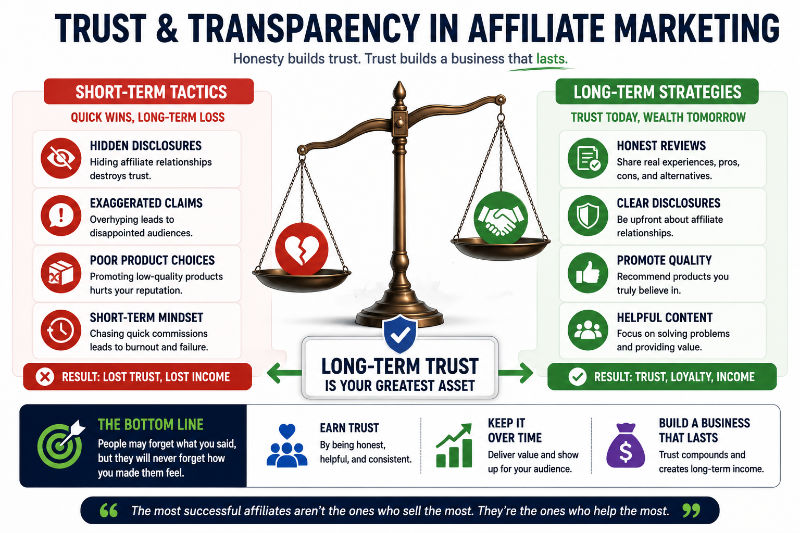
Affiliate Disclosures, Legal Requirements, and Ethical Marketing
Affiliate marketing is built on trust.
We've discussed that idea throughout this guide because it's one of the most important principles in the entire industry.
Trust helps people feel confident in your recommendations.
Trust encourages repeat visitors.
Trust increases affiliate conversions.
Trust also plays an important role in legal compliance.
If you're earning commissions from affiliate links, you need to be transparent about it.
Fortunately, affiliate disclosures are simple, easy to implement, and often help build credibility rather than hurt it.
What Is an Affiliate Disclosure?
An affiliate disclosure is a statement that informs readers you may earn a commission if they purchase through your affiliate links.
It's a way of being open about your relationship with the companies whose products you recommend.
A simple disclosure might say:
"This article contains affiliate links. If you purchase through these links, I may earn a commission at no extra cost to you."
That's it.
No complicated legal language is required.
The goal is simply to ensure your audience understands that a financial relationship exists.
Why Affiliate Disclosures Matter
Affiliate disclosures matter for two important reasons.
Legal Compliance
Many countries require affiliates to disclose financial relationships when promoting products.
The exact regulations vary by location, but the underlying principle remains consistent:
People should know when recommendations may result in compensation.
Building Trust
Transparency often strengthens credibility.
Most readers understand that content creators need to earn money.
In fact, many people are happy to support creators they trust by using affiliate links.
Problems usually arise when affiliate relationships are hidden.
Honesty helps prevent those issues.
Where Should Affiliate Disclosures Be Placed?
One of the biggest mistakes affiliates make is hiding disclosures where nobody sees them.
Your disclosure should be clear and easy to find.
Common locations include:
- Near the beginning of an article
- Before affiliate links appear
- Within email newsletters
- In YouTube video descriptions
- On resource pages
- In social media posts when appropriate
The goal is visibility.
Readers shouldn't have to hunt for your disclosure.
Example Affiliate Disclosure Statements
Here are a few simple examples.
Basic Disclosure
"This article contains affiliate links. If you purchase through one of these links, I may earn a commission at no additional cost to you."
Recommendation-Based Disclosure
"I only recommend products I believe provide value. If you purchase through links on this page, I may earn a commission which helps support this website."
Resource Page Disclosure
"Some of the tools and products listed on this page are affiliate links, meaning I may earn a commission if you choose to make a purchase."
Simple and honest is usually best.
Should You Disclose Every Affiliate Link?
Generally, you don't need a separate disclosure beside every individual affiliate link.
However, readers should be clearly informed that affiliate links exist within the content.
A visible disclosure near the beginning of an article is often sufficient.
For platforms with shorter content, such as social media, specific disclosure practices may be required depending on local regulations and platform policies.
Ethical Affiliate Marketing
Legal compliance is important.
Ethical marketing is equally important.
Just because you're allowed to promote something doesn't necessarily mean you should.
The most successful affiliate marketers think beyond commissions.
They consider the long-term relationship with their audience.
Before recommending any product, ask yourself:
- Would I recommend this to a friend?
- Does this genuinely solve a problem?
- Would I feel comfortable putting my name behind it?
- Does it provide good value?
These questions help protect your credibility.
Avoid Promoting Products Solely for Commissions
Every affiliate eventually encounters products that offer unusually high commissions.
Sometimes those products are excellent.
Sometimes they are not.
A high commission should never be the primary reason for recommending something.
Your audience trusts you to help them make good decisions.
Protecting that trust should always come first.
One poor recommendation can damage relationships you've spent months or years building.
Be Honest About Product Limitations
No product is perfect.
Every product has strengths and weaknesses.
When creating reviews or recommendations, don't be afraid to discuss limitations.
For example:
- Who the product is suitable for
- Who should avoid it
- Potential drawbacks
- Situations where alternatives may be better
Readers appreciate balanced information.
In many cases, honest reviews actually improve conversion rates because they feel more authentic.
Don't Make Unrealistic Claims
This is especially important in niches such as:
- Health
- Fitness
- Finance
- Business opportunities
Avoid exaggerated promises.
Avoid guarantees.
Avoid claims you can't support.
For example:
Instead of saying:
"This software will double your income."
You might say:
"This software can help automate certain tasks and improve efficiency."
Accurate expectations protect both your audience and your reputation.
Prioritise Long-Term Relationships
Many beginners think about affiliate marketing one commission at a time.
Experienced affiliates think differently.
They think about:
- Repeat visitors
- Returning subscribers
- Long-term trust
- Audience loyalty
A visitor who trusts your recommendations today may continue following your advice for years.
That long-term relationship is often worth far more than any individual commission.
The Best Affiliates Act Like Advisors
One useful mindset is to think of yourself as an advisor rather than a salesperson.
Your role isn't to convince people to buy things they don't need.
Your role is to help them make informed decisions.
Sometimes that means recommending a product.
Sometimes it means recommending a cheaper alternative.
Sometimes it means suggesting they don't need a product at all.
Ironically, this approach often leads to better results because people trust advice that feels genuine.
Transparency Creates Stronger Brands
As your affiliate marketing business grows, your reputation becomes one of your most valuable assets.
People begin associating your name, website, content, and recommendations with a certain level of quality.
Transparency strengthens that reputation.
Every honest review.
Every clear disclosure.
Every balanced recommendation.
Every useful piece of content.
These actions contribute to a stronger brand over time.
Ethical Marketing Is Good Business
Some affiliates view disclosures and transparency as obstacles.
Successful affiliates often view them as competitive advantages.
Honesty builds trust.
Trust builds audiences.
Audiences generate commissions.
Ethical marketing isn't just the right thing to do.
It's also one of the smartest long-term business strategies available.
Now that you understand the legal and ethical side of affiliate marketing, let's bring everything together with a practical action plan that shows exactly how beginners can get started and build their first affiliate marketing business step by step.
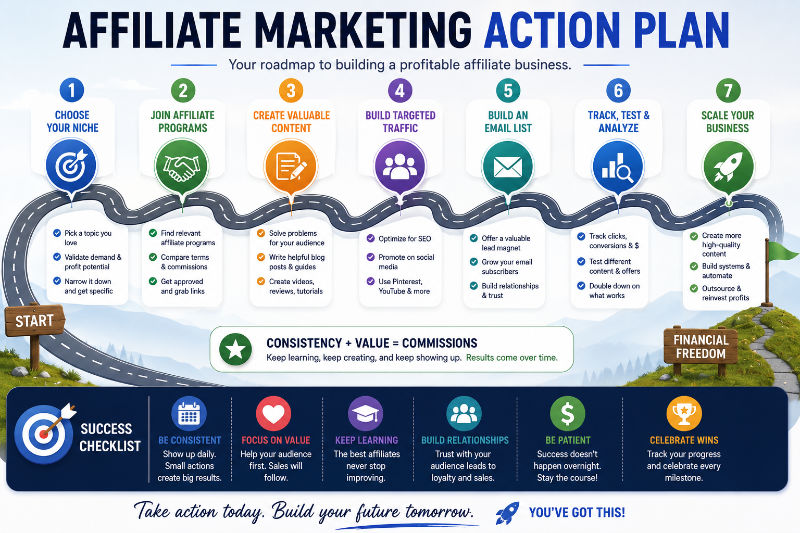
Getting Started With Affiliate Marketing: A Simple Action Plan
At this point, we've covered a lot of ground.
You understand:
- What affiliate marketing is
- How affiliate programs work
- How affiliate links track commissions
- How to choose a niche
- What content generates sales
- Common mistakes to avoid
- Why link management matters
- Legal and ethical considerations
The only thing left is taking action.
Many people spend months researching affiliate marketing without ever getting started.
Don't fall into that trap.
You do not need to know everything before you begin.
In fact, most successful affiliates learned far more from creating content than they ever did from reading about it.
The goal is progress, not perfection.
Let's break the process into simple steps.
Week 1: Choose Your Niche
Your first task is selecting a niche.
Remember, you're not looking for the perfect niche.
You're looking for a niche that:
- Interests you
- Has an audience
- Contains products people buy
- Provides enough content opportunities
A good question to ask yourself is:
"What topics could I happily create content about for the next two years?"
The answer will often point you in the right direction.
Make a List
Write down:
- Hobbies
- Skills
- Professional experience
- Personal interests
- Problems you've solved
You may discover several viable niche ideas.
Research Affiliate Opportunities
Before committing to a niche, spend some time searching for affiliate programs.
Look for:
- Relevant products
- Trusted companies
- Reasonable commission structures
- Products you'd genuinely recommend
You don't need dozens of affiliate programs.
A handful of quality opportunities is enough to get started.
Week 2: Create Your Platform
You need a place to publish content.
For most beginners, this usually means one of three options:
A Website
A website remains one of the best long-term affiliate marketing assets.
You control:
- The content
- The branding
- The audience experience
Unlike social platforms, your website belongs to you.
A YouTube Channel
Video content can be extremely effective for affiliate marketing.
Reviews, comparisons, demonstrations, and tutorials often perform well on YouTube.
A Hybrid Approach
Many successful affiliates combine:
- A website
- A YouTube channel
- An email list
This creates multiple opportunities to reach potential buyers.
If possible, start building assets you own from day one.
Week 3: Join Affiliate Programs
Once your platform is ready, begin applying for affiliate programs.
Focus on products that:
- Fit your niche
- Solve real problems
- Have a good reputation
- Match your audience's needs
Don't worry about joining dozens of programs.
Start with a small number.
Learn how they work.
Expand later.
Organise Your Links Early
This is also a good time to establish a system for managing affiliate links.
Many beginners ignore organisation until it becomes a problem.
A simple system now can save a great deal of time later.
As your content library grows, tools such as GoshLinks can help you create branded links, organise campaigns, and update destinations without editing old content individually.
You don't need advanced systems on day one, but it's worth understanding where your business is heading.
Week 4: Create Your First Content
Now it's time to publish.
This is where many people hesitate.
They worry that:
- Their content isn't perfect.
- They aren't experienced enough.
- Their website isn't ready.
- Their audience is too small.
Ignore those thoughts.
Every successful affiliate started with imperfect content.
The important thing is getting started.
Create Problem-Solving Content
Focus on helping people.
Ask:
- What questions does my audience ask?
- What problems do they face?
- What buying decisions are they trying to make?
The answers become your content topics.
Good Beginner Content Ideas
Examples include:
- Beginner guides
- Product reviews
- Comparison articles
- Tutorials
- Resource pages
- Frequently asked questions
Choose topics that provide genuine value.
Your First 10 Pieces of Content
Instead of obsessing over commissions, focus on publishing your first ten useful pieces of content.
This creates momentum.
It also gives you valuable practice.
Many beginners underestimate how much they learn during this stage.
By article ten, you'll understand far more than you did when you started.
Your First 90 Days
The first three months should be viewed as a learning period.
Focus on:
- Publishing consistently
- Learning your niche
- Improving your content
- Understanding your audience
- Building systems
Don't judge success solely by commissions.
Commissions often arrive later.
The real goal is building assets.
What Success Looks Like in the First Year
A successful first year might include:
- A growing content library
- Increasing traffic
- Your first commissions
- Better content creation skills
- A deeper understanding of your audience
- Growing confidence
These achievements often matter more than immediate income.
They create the foundation for future growth.
Build Assets, Not Just Income
This mindset can completely change how you approach affiliate marketing.
Instead of asking:
"How much did I earn today?"
Ask:
"What asset did I build today?"
Assets include:
- Articles
- Videos
- Email subscribers
- Resource pages
- Reviews
- Comparisons
- Tutorials
Every asset increases your ability to generate future commissions.
Stay Consistent
Most affiliate marketing success stories have one thing in common.
Consistency.
Not perfection.
Not genius.
Not luck.
Consistency.
The affiliates who continue publishing useful content month after month usually outperform those who constantly chase shortcuts.
Affiliate marketing rewards patience.
The effort you invest today may continue producing results for years.
Your Affiliate Marketing Checklist
If you're ready to get started, here's a simple checklist:
☐ Choose a niche.
☐ Research affiliate programs.
☐ Create a website, YouTube channel, or both.
☐ Join a small number of relevant affiliate programs.
☐ Publish your first piece of content.
☐ Continue creating helpful content consistently.
☐ Build an email list.
☐ Track what works.
☐ Improve over time.
☐ Stay focused on helping people.
It really can be that simple.
The challenge isn't understanding the steps.
The challenge is continuing long enough to see the results.
The affiliates who stick with the process are often the ones who eventually build meaningful income streams.
Before we wrap up, let's answer some of the most common questions beginners have about affiliate marketing.
Frequently Asked Questions About Affiliate Marketing
If you're new to affiliate marketing, you probably still have a few questions.
That's completely normal.
Let's answer some of the most common questions beginners ask before they start their affiliate marketing journey.
Is Affiliate Marketing Free to Start?
Yes, affiliate marketing can be started with very little money.
Many affiliate programs are completely free to join.
You can begin creating content on platforms such as:
* YouTube * Facebook * Instagram * TikTok * LinkedIn
However, if you're serious about building a long-term affiliate business, investing in your own website is usually a smart decision.
A website gives you greater control over your content, branding, and audience.
Do I Need a Website for Affiliate Marketing?
No.
Many affiliates successfully promote products through:
* YouTube * Social media * Email newsletters * Podcasts
That said, a website remains one of the most valuable assets an affiliate can own.
Unlike social media platforms, you control your website.
You decide how content is organised, how products are promoted, and how visitors interact with your brand.
Many successful affiliates eventually combine a website with other marketing channels.
How Long Does It Take to Earn Your First Affiliate Commission?
There is no universal answer.
Some people earn a commission within days.
Others take several months.
The timeline depends on factors such as:
* Your niche * Content quality * Traffic levels * Promotion efforts * Audience trust
The most important thing is not to become discouraged if commissions don't appear immediately.
Affiliate marketing is often a long-term game.
Focus on creating valuable content and building trust first.
How Much Traffic Do I Need to Make Money?
There isn't a specific traffic number that guarantees success.
A website with 1,000 highly targeted visitors may outperform a website with 20,000 untargeted visitors.
Quality matters more than quantity.
Visitors who are actively researching products and solutions are generally much more valuable than casual visitors with no buying intent.
That's why understanding your audience is so important.
Can I Do Affiliate Marketing Without Showing My Face?
Absolutely.
Many affiliate marketers build successful businesses without appearing on camera.
Examples include:
* Blog websites * Review sites * Resource websites * Email newsletters * Voice-over videos * Screen-recorded tutorials
Showing your face can help build trust, but it is not a requirement.
Choose a content style that suits your strengths and comfort level.
What Are the Best Affiliate Programs for Beginners?
The best affiliate programs are usually the ones most relevant to your audience.
Popular beginner-friendly options include:
* Amazon Associates * ShareASale merchants * CJ Affiliate merchants * Awin merchants * Impact partners * PartnerStack software companies
Rather than chasing the highest commissions, focus on finding products that genuinely help your audience.
Relevant recommendations typically perform far better than random promotions.
Can I Promote Multiple Affiliate Programs?
Yes.
Many successful affiliates promote multiple products and services.
The key is maintaining relevance.
For example, a photography website might recommend:
* Cameras * Lenses * Editing software * Camera bags * Online photography courses
All of these recommendations serve the same audience.
Problems usually arise when affiliates promote unrelated products that confuse their readers.
Is Affiliate Marketing Still Worth It in 2026?
Yes.
Affiliate marketing continues to be one of the most accessible online business models available.
The tactics may evolve.
Platforms may change.
Technology will continue advancing.
But businesses will always need customers, and customers will always need trusted recommendations.
As long as those two realities exist, affiliate marketing will remain relevant.
Is Affiliate Marketing Passive Income?
Not at first.
This is one of the biggest misconceptions in the industry.
Affiliate marketing requires effort.
You need to:
* Create content * Build trust * Attract visitors * Learn new skills
However, successful content can continue generating commissions long after it's published.
That's why many people describe affiliate marketing as a business with passive income potential rather than a passive income business.
The upfront work comes first.
The ongoing rewards come later.
What Is the Biggest Mistake Beginners Make?
The biggest mistake is quitting too early.
Most affiliate marketing success takes time.
Content needs time to rank.
Audiences need time to trust you.
Traffic needs time to grow.
The affiliates who succeed are often the ones who continue showing up long after others have given up.
Should I Focus on SEO or Social Media?
Ideally, both.
Search engine optimisation can generate long-term traffic.
Social media can help build awareness and relationships.
Many successful affiliate marketers use a combination of:
* SEO * YouTube * Email marketing * Social media
Diversifying traffic sources can create a more resilient business.
How Many Affiliate Programs Should I Join?
Start small.
A few quality affiliate programs are usually enough.
As your audience grows and your content expands, you can add more opportunities.
Managing a small number of relevant programs is often far more effective than juggling dozens of unrelated ones.
Do I Need Special Tools for Affiliate Marketing?
Not necessarily.
You can start affiliate marketing with very few tools.
As your business grows, however, certain tools can help improve efficiency.
Examples include:
* Website analytics * Keyword research tools * Email marketing platforms * Affiliate link management tools
The key is solving problems as they arise rather than buying every tool available.
What Is GoshLinks and Why Would an Affiliate Marketer Use It?
GoshLinks is a WordPress link management plugin that helps marketers create branded short links, organise campaigns, and track clicks.
For beginners with only a few affiliate links, simple organisation may be enough.
As your content library grows, managing affiliate links becomes increasingly important.
Many affiliates eventually find themselves managing hundreds of links across blog posts, videos, emails, and social media campaigns.
Using branded links through a platform such as GoshLinks can help you:
* Create cleaner affiliate links * Strengthen your brand * Track clicks * Organise campaigns * Update destinations without editing old content individually
It's not a requirement for getting started, but it can become a valuable tool as your affiliate marketing business expands.
Can Anyone Succeed With Affiliate Marketing?
Most people can learn affiliate marketing.
Success depends less on technical ability and more on consistency.
The people who tend to succeed are those who:
* Keep learning * Continue creating content * Focus on helping others * Build trust * Stay patient
Affiliate marketing isn't reserved for experts.
Many successful affiliates started with no audience, no traffic, and no prior experience.
What separated them from everyone else was their willingness to keep going.
Final Thoughts
Affiliate marketing remains one of the most beginner-friendly online business models available today.
You don't need your own products.
You don't need a warehouse.
You don't need employees.
You don't need a huge budget.
What you do need is a willingness to learn, create helpful content, and consistently serve your audience.
Throughout this guide, we've covered the foundations of affiliate marketing, including how affiliate programs work, how affiliate links track sales, how to choose a profitable niche, what content generates commissions, and how to avoid the mistakes that hold many beginners back.
If there's one lesson to remember, it's this:
Focus on helping people first.
The affiliates who earn the most commissions are rarely the ones chasing commissions.
They're the ones solving problems.
They're answering questions.
They're sharing experiences.
They're helping people make better buying decisions.
Trust becomes traffic.
Traffic becomes clicks.
Clicks become commissions.
Over time, those commissions can grow into a meaningful income stream.
As your business expands, remember to treat it like a real business.
Build assets.
Grow your email list.
Create useful content.
Protect your reputation.
And as your content library grows, make sure you're managing your affiliate links effectively so the work you're doing today continues generating results tomorrow.
Affiliate marketing is not a shortcut to overnight success.
It is, however, a proven business model that rewards patience, consistency, and a genuine desire to help others.
Start small.
Keep learning.
Keep publishing.
And most importantly, keep going.
Your first affiliate commission may be closer than you think.